

The heat insulation principle of nano-ceramic window film is based on the spectral selectivity of the material at the nanoscale. It achieves efficient and precise heat management through the physical means of absorption and reflection, which is fundamentally different from the reflection principle of metal film.
1. Selective spectral absorption of nanoparticles
The core technology lies in fabricating ceramic materials into precisely sized nanoparticles. These nanoparticles exhibit selectivity for different wavelengths in the solar spectrum: they possess extremely high transmittance for visible light (380-780nm), ensuring clear visibility; simultaneously, they have a strong ability to absorb and convert near-infrared radiation (780-2500nm), which carries the main source of heat. After absorbing infrared energy, the nanoceramic particles convert it into harmless microscopic vibrations or re-radiation, rather than directly conducting it into the vehicle interior.
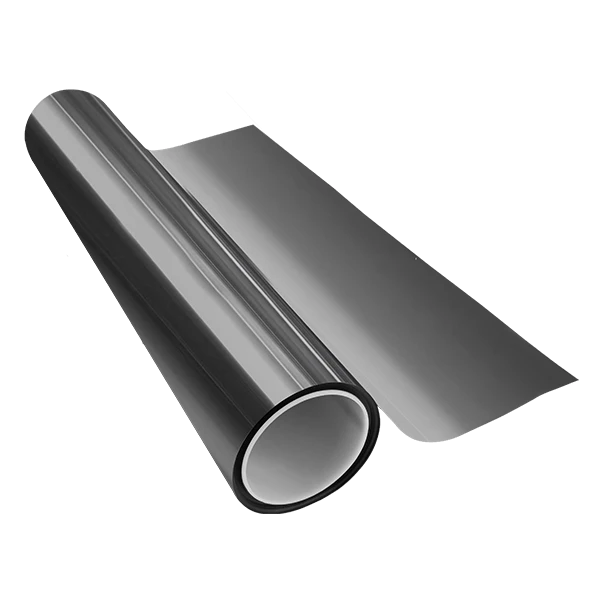
2. Non-metallic reflection and secondary heat dissipation
Some high-end nano-ceramic films also employ multi-layered nanostructures to non-interfere with the reflection of mid- and far-infrared rays. This reflection does not rely on continuous metal layers, thus avoiding electromagnetic shielding. Combined with its high absorption characteristics, this creates a highly efficient heat insulation mechanism that prioritizes absorption while supplementing with reflection, achieving ultimate heat insulation performance under conditions of high light transmittance.
3. Durable and stable physical properties
Since the process is a purely physical effect that relies on the stable optical properties of the nanomaterial itself, its thermal insulation performance will not decay over time like dyed films, nor will it fail due to oxidation like metal films, thus achieving consistent thermal insulation performance over time.